National Foundation for Celiac Awareness

April 2008
March 2008
February 2008
January 2008
December 2007
November 2007
October 2007
September 2007
August 2007
July 2007
June 2007
April 2007
March 2007
February 2007
December 2006
November 2006
News


CONTACT INFORMATION

www.CeliacCentral.org
Editorial Comments:
Vanessa Maltin
Editor@CeliacCentral.org

CeliacCentral

Volume 3 Issue 3
March 2008 Printable PDF


Newsletter Articles:

NOTE FROM ALICE
NFCA Executive Director

Alice Bast Plant your own seeds this spring... the seeds of awareness. Word of mouth is one of the best forms of helping those folks still undiagnosed get diagnosed. Like Mother Nature your words have limitless potential to pollinate your community so, in turn, additional seeds of awareness may germinate. For celiac sufferers the real beauty in spreading the word is that you may help improve the quality or EVEN save the life of another

person. You see, we are lucky to have a celiac diagnosis. We have a treatment, a gluten free diet.

Just think...just by "sharing your story" you can help someone Restore Her Health and Reclaim Her Life. Just think...just by passing out brochures to doctors in your area, you can help someone Restore Her Health and Reclaim Her Life. Just think... just by distributing brochures to local school nurses, you can help someone Restore Her Health and Reclaim Her Life. Just think....just by volunteering at local health fairs, you can help someone Restore Her Health and Reclaim Her Life. Just think.... Just by telling people to fill out the symptom checklist, you can help someone Restore Her Health and Reclaim Her Life. Just think... just by donating to the NFCA (www.CeliacCentral.org), you can help someone Restore Her Health and Reclaim Her Life.

So, this spring...set a goal! And, think positive! Tell five friends about celiac disease. Who knows, they might have it, too. Also, try meeting other people with celiac. It is comforting to know others have a similar story. By helping others, you will help yourself! You never know who you will bump into in the elevator, at the supermarket, standing in line at the movie theater. They can be an influencer and help create the seeds of change. How do you think great corporations like PF Chang's and Anheuser-Busch decided to enter the gluten-free market? They were inspired by a celiac sufferer just like "YOU"!!! We have a vision for the future, and the future is now!!!! But we need your help. There is work to do and we need people like you to do it!

Get out and spread the seeds of change.

Back to Top

BEYOND RICE CAKES
Baby Bits: Registry Seeks to Link Celiac Disease to Birth Defects

By Vanessa Maltin
NFCA Director of Outreach & Programming

Diarrhea, bloating and gas are the first things that come to mind when I hear the words celiac disease. Icky right?!?! But have you ever stopped to think about the non-gastrointestinal complications? I'm talking about things that you might not associate with celiac disease…complications that might not even be linked yet.

According to the University of Chicago Celiac Disease Center, there are more than 300 symptoms related to celiac disease. To better understand how celiac disease affects the body and how it may relate to birth defects, the National Foundation for Celiac Awareness and Birth Defect Research for Children are asking that parents who are diagnosed with celiac disease to register their children in the National Birth Defect Registry if their children have been diagnosed with a structural or functional defect. The registry will help determine if celiac disease plays a role in children developing birth defects.

What does this mean and how do you know if you should register your child?

First of all, you must understand what a birth defect is. According to the Centers for Disease Control and Prevention (CDC), a birth defect is an abnormality of structure, function, or metabolism (body chemistry) present at birth that results in physical or mental disability, or is fatal. Most birth defects occur during the first three months of pregnancy, but brain development continues throughout pregnancy so there may be effects past the first trimester. There are thousands of different birth defects that range in severity from very mild to extremely severe and life threatening. Approximately 250,000 babies are born each year with a major structural birth defect.

There are two categories of birth defects. Structural birth defects are related to body parts and generally result in physical disabilities. Common structural defects include cleft lip or cleft palate, heart defects, abnormal limbs, and neural tube defects that are related to development of the brain and spinal cord.

Functional birth defects relate to how the body works and may result in immune and nervous system disabilities. Examples of functional defects include problems such as attention disorders, autism, Asperger's Syndrome, Pervasive Developmental Delay, learning disabilities and other intellectual disabilities.

Birth defects are recorded on the newborn hospital records of 3% or more of babies born in the United States. But, from one-third to one-half of all birth defects are not detected in the neonatal period. If babies are followed for 5-7 years after birth, up to 16% may have a minor or major birth defect. Approximately 20% of all birth defects are genetic (having one or more gene that does not work correctly; having an extra chromosome or missing part of one). Other birth defects are caused by maternal illnesses like diabetes or exposure to certain viruses like rubella or CMV. In addition, an increased risk birth defects has also been linked to deficiencies in certain nutrients like folic acid. Other experts believe that 25% or more of birth defects of unknown causes will be linked to an adverse environmental exposure during pregnancy or in the prenatal period.

Can celiac disease cause birth defects? The answer is: we don't know! That's why we would like to join with Birth Defect Research for Children in collecting data through the National Birth Defect Registry. We want to collect information about current patients to determine if there is a there is a link that can be proved scientifically.

The National Birth Defect Registry is a research project designed through a collaboration of seven prominent scientists. The registry collects information on all categories of structural and functional birth defects as well as the health, genetic and environmental exposure histories of the mothers and fathers of these children. Registry data have identified patterns of birth defects in the children of Vietnam and Gulf War Veterans. The registry has also helped detect clusters of birth defects in communities with toxic environmental exposures and in the children of mothers exposed to similar medications during pregnancy. Registry data have been presented to numerous government agencies and in many national and international media forums.

How can you help?

If you have celiac disease and are the parent of a child who was born with a structural or functional defect, enter your case in the registry.

Step 1: Register your case at http://www.birthdefects.org/registry/main.asp. You will be asked to fill out basic demographic information about your family's medical history.

Step 2: Currently, there is no option within the registry to select celiac disease. But don't worry! When you respond to the section about maternal and paternal illness, just fill in the blank that you are DIAGNOSED WITH CELIAC DISEASE or UNDIAGNOSED CELIAC DISEASE, depending on the time of the diagnosis in relation to childbirth. The evidence must be medically documented cases of both celiac disease and the structural or functional birth defect.

If you are a parent of a child with birth defects, please take a few minutes to contribute to the registry. Your participation will ensure that future research includes celiac disease and helps all of us with celiac better understand our disease and how it affects our future children.

Once data is collected, NFCA will publish the findings!

Resources:

Back to Top

ASK-THE-CHEF
Chocolate for Dinner: How to Use Chocolate for More than Dessert

By Edgar Steele
NFCA Chef Spokesman

Cooking "inside the box" leads most of us to follow a recipe, adjust the final product to our personal taste, and then enjoy the fruits of our labor. To help us understand how not only to follow directions in cooking, but to create our own dish and flavor profiles that will be pleasing to the palate, it is important to break away from the "training wheels" of a guide such as a recipe, and to learn how dishes are built. One may ponder how something like chocolate can be used to create a savory dish. In order to understand the answer, it is important to understand the following: with the proper thought process, it is easier and, eventually, more pleasing to follow your own guidelines for cooking than to follow directions. Recipes are important for inspiration and fundamental learning, but, when used properly, will be building a base instead of a law to follow.

In my opinion, starting with the profiles of flavor and texture is crucial to find the starting point in the process. As an example, let's examine a traditional gazpacho. The flavors are sweet from the tomatoes, spicy from the jalapeno, sour from lime and/or vinegar, refreshing from the premium ingredients, and salty from the adjusted seasoning. Next, the texture of the soup is creamy from the bread and crunchy from the croutons. Change it!

Try using a different type of tomato, such as a yellow or green heirloom variety. This may change the sweet or acidic properties of the soup. Try using a different source of acidity such as lemon, your favorite vinegar, or some type of berry. Try using a new spice, such as cayenne or a different variety of chili. The realm of textures in a soup is usually intertwined with a garnish, and this is the fun part. When deciding on the garnish, look first to the ingredients in the soup. How can you manipulate a tomato? You may wish to extract the seed (refer to the NFCA archived watermelon article). You may wish to prepare a gelatin of tomato juice to place atop the soup in cubed form. An oil of sun dried tomato and extra virgin olive oil can be drizzled atop as well for an extra flavor and texture. Try hitting the finished plate with fresh zest of lemon or lime. If using a berry in the mix, place a fresh cut berry atop the soup.

I didn't once mention chocolate in the above example, and for this I apologize a little bit. It really is not important, however, because chocolate is not the lesson. The main point is for us to focus on the properties of each individual ingredient and gain an understanding of their flavor and texture contributions to a dish. What is chocolate? To the mouth it can be sweet, bitter and creamy. Let's embrace those properties, and, then, develop them. Before we create a spectacular dish, we owe it to the chocolate to understand its roots.

Chocolate as we know it is produced from the tropical cacao tree, which is native to South America. The seeds of the cacao tree are fermented, dried, cleaned, roasted, and the shell is then removed. The shell of the seed is removed at this point to produce a wonderfully bitter and crunchy ingredient known as cocao nibs. These nibs can be used in their natural state or ground and liquefied to create chocolate liquor. From this liquor, cocoa solids and cocoa butter are produced. Most of the chocolate marketed and therefore used by chefs is sweetened chocolate, which is the combination of chocolate in its pure form with sugar. In its pure form, chocolate is mainly cacao solids and cocoa butter in varying proportions. Milk chocolate is pure with the addition of a milk product, and white chocolate contains cocoa butter, sugar and milk but with the absence of cocoa solids. Because of its absence, the cocoa solids make the white variety not a true chocolate. Dark chocolate has the benefit of lowering blood pressure and has a number of antioxidants.

Now let's incorporate chocolate into our dish-developing solution.

I like grilled chicken with buttered carrots, sautéed collard greens, and mashed potatoes. Do we dare incorporate chocolate into this mix? I want to so badly! As a starting point of inspiration for this fusion, I will reference a traditional molé sauce. A molé sauce is nuts, fruit, chilies, herbs, vegetables and… chocolate. From this point, it is a game of matching. Let's marinate our beautiful breasts of chicken in a mix of fruit juice such as orange with cocoa powder for 12 hours before grilling. Next, I will make a glaze of butter, cocoa butter and fresh chopped cilantro for the carrots which will be blanched ahead of time. When whipping the potatoes, I will add a hint of white chocolate to the butter and cream that will be used to texture and flavor the potatoes. This will provide an added note of sweetness and creaminess to the final mashers. After sautéing the greens in extra virgin olive oil and garlic, I will toss in some cocoa nibs at the end for some added crunchy texture. We now have a modified version of my favorite, yet simple, chicken with chocolate…and this is only the beginning!

White Chocolate Scallops with Cauliflower Puree

  • 6 oz. fresh scallops
  • Cocoa butter for dusting
  • 8 oz cauliflower
  • 3 qts. salted water
  • 3 Tbsp. heavy cream, heated
  • 1 tsp. extra virgin olive oil
  • 1 oz butter, room temperature
  • 1 Tbsp. white chocolate, chopped
  • 1 tsp. chopped parsley
  • Salt to taste
  1. Trim the tips of the cauliflower to yield ¼ cup cauliflower florets. In a small saucepot, heat salted water to a boil. Place the cauliflower in the water and boil just until soft, about 3 minutes. Drain the water and add the cooked cauliflower directly into a blender. Add 2 tablespoons of the hot cream and the butter, and puree on high speed until the mixture is smooth.
  2. Add the white chocolate to the remaining cream and stir until it is completely melted and keep this mixture hot.
  3. Heat the oil in a small sauté pan, and sauté the cauliflower florets until golden brown. Season them with salt.
  4. Dust the scallops in the cocoa butter, season them with salt and heat a sauté pan to medium high heat. Add the scallops to the pan, and allow them to cook to a golden color on both sides.
  5. Place a few dollops of the cauliflower puree onto a plate. Place the seared scallops on top of the puree. Arrange the sautéed cauliflower in a scattered fashion around the scallops. Drizzle a small amount of the white chocolate over the plate. To finish, sprinkle the parsley over the scallops and serve hot.

Back to Top

GLUTEN-FREE COOKING SPREE
Beer Jello?? St. Louis Gluten-Free Cooking Spree Brings New Flavors, Delicious Food

By Vanessa Maltin
NFCA Director of Programming & Communications

Have you ever been in a room filled with gluten-free beer…..beer bottles, beer bread, beer jello and nearly every other food item made from gluten-free beer! Sounds like a dream right?? On Tuesday February 26 this actually happened at none other than Anheuser-Busch's headquarters!

Top St. Louis-area chefs, doctors and dietitians took over the Budweiser and Bud Light rooms at the Anheuser-Busch Brewery and cooked up some of the most delicious gluten-free beer-based meals of all time! Five teams raced against the clock to prepare decadent meals that highlighted the event's secret ingredient: Redbridge Beer.

Team 1 included Chef Matthew Dawson (Peppertini's Piano Bar & Grill), Dr. Tara Talwar (St. Anthony's Medical Center), Jamie Bommarito (St. Louis University), and Stephanie Jansing (St. Louis University). This team presented Chilean Sea Bass Tempura.

Team 2 was led by the former executive chef of the Plaza Hotel in New York City, Chef Marc Felix. He was joined by Dr. Paul Stein (Washington University School of Medicine), Dr. Kathryn Diemer (Washington University School of Medicine) and Aaron Reinberg (Operation Food Search). This team went against the norm by preparing a Redbridge Beer Jello with Tapioca Pearls, Tropical Fruit Salsa and Redbridge Foam. All I can say is YUMMY! AMAZING…OH MY GOODNESS!

Team 3's Chef Eric Brenner (Moxy Bistro) actually doubles as a drummer after he finishes cooking! His teammates were Dr. Amanda Heidemann (BJC Medical Center), Lori Richardson (Apria Healthcare) and Lana Sepek. This team made a fabulous Steak and Ale Stew.

Team 4 was a huge hit! Chef Scott Phillips (Provisions Gourmet), Dr. Brent Tetri (St. Louis University), Dr. Marc Bernstein (Endoscopy Center of St. Louis) and Betty Jo Hummel (St. Louis Dietetic Association) presented a Redbridge Chicken with Caramelized Onion Cream. Soooo good!

Team 5 prepared a delightful Chevre Stuffed Chicken Vera Cruz with Roasted Corn and Red Pepper Rice Pilaf. This team included Chef Robert Huhn (Aramark), Dr. James Keating (St. Louis Children's Hospital), Tara Todd (St. Louis Children's Hospital) and Molly Ennis (St. Louis University).

The judges for the evening were Candace O'Conner (Outlook Magazine), Dr. Leonard Weinstock (BJC Hospital), Amy Davis (Crossing Back to Health), and Catherine Neville and Allyson Mace from Sauce Magazine.

So…who were the big winners for the night?? It was a tie! The judges couldn't decide, so the NFCA decided to award two prizes: The first was for BEST TASTE. This award went to team #4 with the Redbridge Chicken with Caramelized Onion Cream. The second award was for BEST USE OF GLUTEN-FREE INGREDIENTS. This award went to team #2 with the Redbridge Beer Jello with Tapioca Pearls, Tropical Fruit Salsa and Redbridge Foam! I just knew the jello would win! They used 7 different Bob's Red Mill flours!


A huge thank you to Anheuser-Busch for providing the perfect location for the event and for being such a tremendous help with raising awareness of celiac disease…but most of all thank you for Redbridge beer!

A very special thank you to all of the NFCA sponsors who make having these events possible and to all of the vendors who graciously donated food for the event! We couldn't have done it without you!

And, a HUGE ROUND OF APPLAUSE for the St. Louis Celiac Community for making this one of the largest attended Cooking Sprees yet!

Back to Top

CLINICAL OUTLOOK
Functional Medicine: Repairing the Damage of Celiac

By Dr. Morgan Camp M.D.

Mainstream medical treatment for Celiac Disease consists of one remedy and one remedy only: stop your intake of gluten. This methodology ignores one of the most important hidden facts about Celiac Disease: during the months, years, or decades of gluten consumption, numerous systems, organs and functions of your body can endure serious, long-lasting damage. Simply adopting a gluten-free diet does not repair the body's compromised organs and pathways.

Stopping your gluten intake is vital, but it is only the first step on the healing path. Changing your diet is like stopping a physical beating: no additional blows are raining down on you, creating further damage. Yet the organs, limbs and bones which suffered the hits desperately need medical attention. In much the same way, the damage of Celiac continues to plague the body long after you enter the gluten-free zone, unless you work with a practitioner with appropriate qualifications and skills to help guide you.

What is Functional Medicine?
Functional Medicine is a comprehensive approach to Celiac designed to correct the long-standing damage created by gluten. Functional Medicine is a sound scientific method that focuses on identifying and correcting the underlying causes of illness and disease. It is founded on the following tenants:

  1. Each patient is genetically and bio-chemically unique.
  2. Diagnosis and treatment is customized for each individual patient.
  3. Treatment targets the underlying causes of illness, not just the symptoms that mask the causes.
  4. Testing and evaluation is based on "optimal levels," rather than "population norms."
  5. A powerful emphasis is placed on in-depth understanding of the patient: their life, environment, relationships and needs. As the father of modern medicine, Sir William Osler stated, "It is more important to know which patient has the disease than to know which disease the patient has."

In contrast, allopathic medicine specializes in prescriptions for drugs that mask symptoms while ignoring the underlying causes. Although this financially benefits the pharmaceutical business, it does very little to improve long term health. Functional Medicine desires to uncover the factors that contribute to a disease and create individualized programs to correct the underlying imbalances.

Celiac's Ongoing Legacy
As a practitioner of Functional Medicine, I work in partnership with you to uncover the hidden causes that contribute to your current state of ill health. For patients with Celiac Disease, these problems include:

  • Small-intestinal overgrowth with bacteria and/or yeast. (The small intestine is just past the stomach.)
  • Hidden parasitic infections.
  • Food sensitivities and food allergies.
  • Inability to properly digest foods in addition to gluten and gliaden.
  • Specific nutritional deficiencies including B12 and other B vitamins, and minerals such as calcium and magnesium.
  • Impaired liver detoxification, creating increased sensitivity to medication, chemicals, diet, and environmental toxins.
  • Depleted serotonin levels, contributing to low energy and depression.
  • Weakened immune system.

How will a visit to a functional medicine doctor be different than a visit to my doctor?
With so many variables active within each patient, I take valuable time to know and understand each of my patients. Lifestyle, exercise, diet, and stress levels play a significant role in Celiac health. It can be challenging to wade through the murky waters of hidden gluten and gliadin intolerance and we help each person become more aware of these issues along with food additives, chemicals, etc. I work closely with our on-staff holistic nutritionist who helps patients make healthier food choices that taste great, and provides emotional support and guidance during the healing process.

In contrast to traditional allopathic medicine, Functional Medicine assists the Celiac patient using a wide array of tests and treatments, in addition to recommending a gluten free diet. An effective Functional Medicine digestive program includes:

  • Replacement of deficient digestive enzymes and hydrochloric acid.
  • Replacement of natural bacterial flora.
  • Removal of pathogenic bacteria, yeasts, and parasites.
  • Elimination of any foods that stimulate an immune response (not just IgE-mediated immune response.)
  • Healing Amino Acids, nutrients, and herbs that work to heal the damaged intestinal lining.

Vital B Vitamins
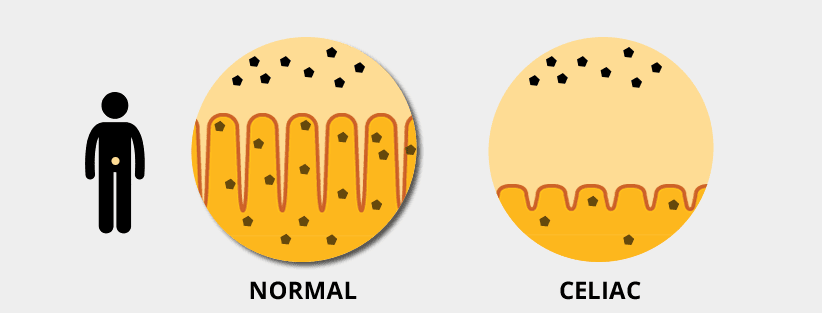
Those with Celiac often have addition vitamin and mineral deficiencies because of the mal-absorption that is occurring in the digestive tract due to the sloughing off of the intestinal villi because of the gluten allergy. The most common are B vitamin deficiencies, especially B-12. These deficiencies are easily diagnosed using serum testing, or for less obvious deficiencies, organic acid panels.

Food Intolerances
In addition, I have found that all of my Celiac patients suffer additional food allergies and intolerances. The most common is dairy intolerance that may not be permanent, sometimes improving after 6 months of a gluten free diet. I measure additional sensitivities using non-traditional testing methods ( these are tests that an allopathic doctor would not usually order), which include IgG testing and other very sensitive measures of cellular immune reactivity to foods.

Fatigue and Celiacs
Fatigue is a very common symptom in Celiac patients, and often caused by one or more of the following:

  • Poor nutrition.
  • Very weak absorption of macro- and micronutrients.
  • Food sensitivities
  • Impaired detoxification pathways in the liver and kidney
  • Vitamin deficiencies

In conclusion, as a functional medicine practitioner, I approach each patient that I see as a unique individual. I use history, physical exam, and functional lab testing to pinpoint the systems, organs, and hormones that are out of balance. I then use a holistic approach to correcting these areas of imbalance through education, scientifically proven vitamin and herbal therapies, and medication (if needed). In addition, I work with each of my patients to identify the emotional, environmental, and stressful triggers that are contributing to their state of ill health. In this manner, I am able to work on many levels to help each patient reach their goal of ideal or optimal health.

Back to Top

EDUCATION & AWARENESS
To Eat or Not to Eat To Eat or Not to Eat... That is the Question with Oats

To eat or not to eat. That is the question that all of us with celiac disease are asking about oats. Are they contaminated or not? Do they contain gluten? Everyone seems to disagree. Here's some information to help you make the decision whether or not oats should be included in your gluten-free diet.

Oats in their natural form do not contain the gluten protein. However, most mills that produce and store oats also manufacture wheat, making the chances of cross contamination inevitable. In addition, current research shows that approximately 1%- 5% of celiac patients react to oats in their pure form. Although the cause for this reaction is unknown, some literature suggests that a protein in oats can trigger a similar response to gluten.

However, for the rest of us, oats in their natural form that are produced in a gluten-free facility are safe and can be enjoyed!

Bob's Red Mill, for example, has gone to great lengths to ensure that their Whole Grain Rolled Oats are prepared and kept safe from contamination. Their oats are grown, transported and processed in entirely gluten-free environments and tested a number of different ways for gluten. With this level of care given to avoiding gluten contamination, most people with celiac disease should be able to safely eat these oats. The back label of the product explains how the oats are prepared and protected from contamination. The folks at Bob's Red Mill even took the time to explain on their label that some celiacs may not be able to tolerate them. Thanks, Bob!

The best advice I can offer is to take a great deal of care before introducing oats into your diet. There is no way to determine if you will react, so proceed with caution. But remember that with each new manufacturer that produces pure oats, there is hope that celiacs can again enjoy a hearty bowl of oatmeal for breakfast!

Back to Top

LIFESTYLE
Outside of the Classroom: From Field Trips to Slumber Parties

By Abby Schwartz
NFCA Volunteer

Sending your celiac child safely out into the world is easy, as long as you plan ahead, ask questions, and are prepared to send along food as needed. Below are some of the social scenarios that your child may encounter, along with suggestions on how to approach them with grace and ease.

Field trips.
Most school trips require students to pack a brown bag lunch that is completely disposable—with no ice packs or thermoses that need to come home. We approach this like we do the packing of her lunch on non-trip days: either a sandwich made on GF bread, or what my daughter likes to call a "snack platter." Some suggestions: cheese sticks, GF pretzels, mini yogurt cups or pudding cups, walnuts or almonds (check your school's nut allergy policy first), raisins or other dried fruit, fresh fruit, cut up veggies (baby carrots, bell peppers), chips or popcorn (many are gluten-free) and a drink. As long as some of the items provide protein, you have a balanced meal that's easy to pack and fun to eat.

Contact your child's teacher ahead of time to find out if any snack stops are being planned as part of the trip, such as a side trip for ice cream. If so, you can call ahead to find out what gluten free options are available for your child. Ask the teacher to assist your child in ordering, if he or she is young.

Slumber parties.
When my daughter sleeps over a friend's house, we handle it one of two ways. Some of her friends' parents are familiar with her dietary needs and (most important) are comfortable cooking a meal with minor adjustments to accommodate her diet. With families like these, we discuss the menu for that night, I ask lots of questions, and I either suggest modifications or provide the ingredients to make the meal safe. A recent example: I provided GF pasta that my daughter ate with their sauce, and I sent over a small bag of rice flour to use for dredging the chicken. A few close friends know how to order fast food for her, and choose to order in.

With other families, we feed her ahead of time and send her to their house loaded up with fun snacks to share with her friends. I let the parents know some mainstream brands of ice cream, popcorn, chips and candy that are safe to eat and easy to find. Breakfast the next day is also easy to handle. Eggs and bacon (do a quick check of the brand ahead of time) are easy and safe. I also volunteer to provide our favorite pancake mix (Bob's Red Mill) and give a quick reminder about watching for crumbs in the butter.

Play dates are handled in similar fashion. If lunch is included, I find out ahead of time what they plan to serve, determine if it is gluten free, and if not, offer to provide an alternative or to feed her ahead of time and provide snacks. We recently sent my daughter to a friend's house with a box of frozen Bell and Evans Gluten Free Chicken Nuggets. They were a huge hit with the kids and were easy for the host mom to make.

Birthday parties.
Okay, I admit it. Birthday parties are often fraught with foods that are off-limits. Pizza, cupcakes and birthday cake, to name the most obvious. We have been fortunate enough to have good friends serve ice cream or hot dogs, knowing that my daughter would be able to eat them. In most cases, the host parents have their hands full and cannot be expected to add your child's special diet to their list of concerns. If it is possible to drop off McDonald's for my daughter I sometimes do so. In other cases, I will feed her ahead of time and provide a fun snack to eat during the cake portion. It used to break my heart to send her to parties and watch the other kids eat foods she couldn't, but then one day I looked a little closer and realized that most of the kids took several bites of food, then left the rest, eager to get back to playing (or skating, or bowling…). What I have learned is that the food is usually the least interesting part of the party for most of the kids. The fun part is the laughter and games and chance to be with friends.

Abby Schwartz is the mother of an 11-year-old daughter with celiac and has been navigating the world of gluten-free living for nearly a decade. She will share her opinions and advice with other celiac parents through this column. You can reach her at GFMom@comcast.net.

Back to Top

RESTAURANT RANTS & RAVES
Dining Out: Asian Style

By Stefanie Kleinman
NFCA Production Coordinator

There are millions of restaurants that make every ethnic food from around the world. If you're on a gluten-free diet, it is sometimes very difficult to decide which restaurants to visit. Of all the types of cuisine available, Asian restaurants are some of the easiest for celiacs to eat at. Whether it's Japanese, Chinese, Vietnamese or Thai, most Asian food uses rice-based products and contains very little gluten, thus making it a delicious option for a dining out experience that both celiacs and their families can enjoy.

But... there are a few things to keep in mind when you go to an Asian restaurant.

  • Beware of soy sauce! Most Asian-style restaurants purchase soy sauce with wheat in it, so call ahead and ask if they carry the gluten-free variety. If you're not positive the particular restaurant you plan on visiting carries gluten-free soy sauce, bring your own. You can purchase packets at www.kariout.com. These are great to keep in your bag and come in handy when you're out and unexpectedly eat at an Asian restaurant.
  • Avoid imitation crab. It contains wheat and is commonly used in sushi and other stuffed treats like crab rangoon. If you order something that contains crab, make sure it's fresh.
  • Ask for rice paper. Many Asian restaurants do have it on hand and can make spring rolls with it which will be safe for celiacs to eat as long as you…
  • Make sure anything fried is not fried in the same oil as the glutinous items on the menu. If the restaurant makes your rice paper spring roll in the same fryer that they use to make shrimp tempura or regular egg rolls, it will no longer be gluten-free.
  • Ask before you order tempura. Traditionally tempura is made with cornstarch and should be safe, but some restaurants may use wheat flour.
  • Double-check any sauces for soy sauce. If the restaurant does not typically use gluten-free soy sauce then any sauces that contain soy sauce will not be gluten-free.

These are just a few suggestions that will help ensure that you and your family has a great meal out! As always, make sure to ask questions and explain your situation. And enjoy your Asian cuisine!

Back to Top

AWARENESS PROJECTS
NFCA Hosts Celiac Awareness Night at Philadelphia 76ers Game

On Monday March 10, the National Foundation for Celiac Awareness teamed up with the Philadelphia 76ers for Celiac Awareness Night at the Wachovia Center. The 76ers took on the Boston Celtics and Celiac Disease all at one time! Gluten-Free hot dogs and hot dog buns, French fries, popcorn and Redbridge beer were available for all of the gluten-free fans to enjoy!


NFCA Executive Director Alice Bast was interviewed courtside about celiac disease and the gluten-free diet—Immediately following her interview a beautifully designed public service announcement filled the 22,000-seat stadium. The word "Diarrhea" took center court on the jumbo-tron and with the help of several 76ers players, everyone at the stadium learned a little bit about celiac! A huge thanks to the 76ers team and the entire staff of the Wachovia Center and Comcast for a very special night! Here are some photo highlights!

Back to Top

UPDATE ON AWARENESS PROJECTS
Celiac Continues to Hit the Slopes

By Valerie Clemens,
NFCA Volunteer

Fifteen-year-old A.J. Clemens continues his fighting spirit to educate the young and old about celiac disease, even while on the ski slopes of New England.

Last November, A.J., a freshman at Radnor High School in Radnor, Pennsylvania, took his school curriculum and enrolled in the Waterville Valley Ski Academy for the five month ski season. There, he is home-schooled and he participates in over 30 ski competitions all over New England. With his school assignments in hand, A.J. travels each week from ski race to ski race. Eating gluten-free on the road can be challenging.

While at the Academy, his meals are prepared by school chef, Eric Bouchard, from Plymouth, New Hampshire. A.J. shared his Celiac Disease information with Mr. Bouchard, who has taken on A.J.'s challenge and has learned about the disease and made his transition easy.

Eric is 56 years old and says, "Preparing A.J.'s food is challenging but not difficult. A.J. is easy to cook for. Some of his favorites are steak and potatoes, gluten-free pancakes, and gluten-free bagels, as well as casseroles and gluten-free pasta dishes!" Other students at the Academy have some food allergies, such as allergies to nuts, and vegetarian needs. Chef Bouchard really was surprised by how many things A.J. is not able to eat because of this disease and how well he handles his situation. While shopping each week for the Academy, Eric is happy to see more and more gluten-free products in the local markets and health food stores.

A.J. is thankful for the support and help Eric and the Academy have shown him during his five month tutorial. While he is excited to return home on the 31st of March, he knows his dietary needs were met by a very helpful chef and friend, Eric Bouchard.

While on the slopes, A.J. wears his NFCA celiac sticker on his POC ski helmet with pride and answers questions when asked "What is celiac?" With help from family and friends, A.J. will succeed in school, living with celiac in a healthy lifestyle and on the slopes! Good luck in your endeavors, A.J.!

Back to Top

AWARENESS ADVOCATES OF THE MONTH

By Nancy Ginter
NFCA Director of Operations

Emma Siegel and Sara Wolfenson, Bat Mitzvah Candidates and Celiac Volunteers

Sara and Emma give the term "dynamic duo" new meaning! This pair of energetic 7th and 8th grade students has dedicated themselves to raising awareness of celiac disease within their communities in a very special way.

The story of Emma's and Sara's meeting is right out of Six Degrees of Separation. Sara is an avid figure skater and skates competitively for a team in her area. As it turns out, Emma's pediatrician's daughter is on Sara's skating team. About 1 1/2 years ago, this pediatrician asked Emma's mother if another patient's family, Sara's family, could contact her regarding the gluten-free diet for their newly diagnosed daughter. The two mothers met for lunch and the rest is history.

Sara and Emma met, and after much discussion, decided to do their Bat Mitzvah social action project together. And, they selected raising awareness of celiac disease as the focus of their program.

Girl power took over immediately! Sara and Emma contacted a number of manufacturers and distributors of gluten-free food hoping to use their products and their facilities to introduce the gluten-free diet to their communities. No one seemed to want 12-year-old girls to give out "medical information".

Enter the Internet and NFCA! Sara and Emma did a search, found NFCA and contacted us with their ideas. Enthused about this Bat Mitzvah project, NFCA sent the girls copies of the Do I Have Celiac brochure to distribute. While they appreciated the information included in this symptom checklist and accompanying recommended tests, they felt that the images were too somber. They asked NFCA if they could redesign the brochure to make it more appealing, especially to a younger audience. They got to work and the result is a "new look" for celiac!

Sara's Bat Mitzvah was on October 27, 2007 and Emma is looking forward to her special day on March 22, 2008. The newly designed brochures were previewed at Sara's Bat Mitzvah and will be distributed at Emma's Bat Mitzvah. The guests will hear about celiac disease, its prevalence in the United States, and learn about the most common symptoms that identify a celiac patient. Emma will highlight the 3 million Americans who have celiac disease and emphasize that 97% of these patients do not know that they have it. And, she will stress that the most important thing for those with celiac is to understand that they must stay on a gluten-free diet to prevent serious health problems.

Emma plans to distribute this newly designed brochure to school nurses as a key point in the identification of celiac for young people. Sara will distribute the brochures to doctors in her community. Both girls believe that this project has helped them better understand celiac disease. As Sara put it, "It has opened my horizons." Sara has developed more respect for food allergies and both are much more aware of the impact of celiac disease than before they started this program.

The thread of celiac runs through both of these families, a clear demonstration that this autoimmune disease has a genetic base. Emma's mother was diagnosed with celiac disease in 2003. Soon after, the two older Siegel children, now 19 and 16 years old, were diagnosed. Emma tests negative for celiac but she does have the gene. Sara's father and younger sister also have celiac disease. In fact, many members of these families have been tested as a precaution.

Emma's mother, Laura, is a good example of the need for greater understanding of celiac. She was diagnosed with celiac disease as a child. Her family and her doctor thought that she had "outgrown" it. When she discovered that she had osteoporosis later in life, she pursued getting tested for celiac as the possible cause. It took undergoing many other tests and real persuasion on Laura's part to get the test and, once again, learn that she has celiac disease.

Before Sara was diagnosed, she was fatigued constantly, was "undergrown" for her age and was not growing. She had the trademark distended abdomen and was not a happy young lady. After her diagnosis following a suggestion by an endocrinologist, Sara felt better within six months.

Sara believes that having celiac disease is "not much of a problem". You just have to change your eating habits. "There definitely is good food out there." She admits, however, that this is not quite so easy when traveling with her skating team. Her favorite place to eat on the road is Fire & Ice, a restaurant with a gluten-free menu in Providence. And, she loves the gluten-free pizza crust at a local pizza place near her home.

When asked about maintaining a gluten-free diet at school, Sara explained that she brings her lunch to school each day to eliminate the possibility of getting gluten accidentally through cross-contamination. When she was required to take a cooking class, she wore gloves to insure that she would be safe. Emma's older sister has a stash of gluten-free snacks in her room at college to be on the safe side. And, of course, family meals are gluten-free. Emma maintains a vegetarian diet. Sara's sister wants to open a gluten-free bakery featuring scones, along with other delicious gluten-free items based on Rachael Ray's cooking.

Like so many others, Emma and Sara both wish there were a pill that would allow people with celiac disease to eat all foods or, as they say, so that "Everyone could eat normally". Emma also suggested that there could be a pill that would stimulate growth of villi allowing celiacs to recover from eating gluten.

NFCA heartily thanks Emma and Sara for their creativity and their dedication. Their energy and passion guarantees that celiac disease is well on it way to becoming a household word wherever these young ladies go. While Emma hopes to be a lawyer and Sara plans to become a fashion designer, we know that raising awareness of celiac disease will be an important part of their lives forever.

Emma and Sara, congratulations!

Back to Top

Celiac In The News

Celiac Disease, Diabetes Have Genetic Link
London researchers studying celiac disease have found that four of the nine celiac gene regions now know are predisposing factors for Type 1 Diabetes.

Scientists Uncover Further Steps Leading to Celiac Disease
Researchers in India have discovered seven additional gene regions which may cause celiac disease.

Given Imaging Announces New Mayo Clinic Study Concludes Celiac Disease May Be More Severe Than Symptoms Indicate for Some Patients
The Mayo Clinic story also found that a capsule endoscopy is a more effective diagnostic tool then an upper endoscopy.

Alvine Pharmaceuticals Obtains Patents for Celiac Disease Therapies
Alvine Phramaceuticals has obtained two key patents for its celiac drug ALV003, which degrades gluten using PEPs. Alvine has an exclusive worldwide license to these patents under an agreement with Stanford University.

Help a Celiac Student!
Help a doctorate psychology student get her degree! If you have celiac and were diagnosed as an adult, participate in this survey and enter to win a $100 gift certificate to Gluten Free Mall.

For more information see below.
Would you like to contribute to research on celiac disease? A graduate student pursuing a doctoral degree in clinical psychology needs your help!

Adults who have been diagnosed with celiac disease are needed to participate in a research study on the experience of living with celiac disease. The requirements to participate in the study are:

  1. You must be an adult who is at least 18 years of age.
  2. You must have been formally diagnosed with celiac disease by a medical doctor during adulthood (at least 18 years of age).
  3. You must be treating your celiac disease with the gluten-free diet.
  4. You must currently live in the United States. This study is a questionnaire that can be completed on paper in your own home or over the Internet. The questionnaire will take approximately 45 minutes to one hour to complete. As thanks for participation in the study, you may choose to enter into a drawing to receive a $100 gift certificate to the Gluten-Free Mall (www.glutenfreemall.com). Participation in this study is anonymous, and your responses are confidential. Participation in this study is voluntary and will not cost you any money.

This study will be conducted by a student researcher who is pursuing a doctoral degree in clinical psychology at the California School of Professional Psychology at Alliant International University in San Francisco, CA.

For more information, please call 1-888-909-2627, or email celiacstudy@gmail.com. To access the survey directly, visit http://www.surveymonkey.com/s.aspx?sm=iuffSJYuhPl0jxWkghGbOw_3d_3d

Thank you in advance to all who participate in this research.

Back to Top

Hot Products

PatsyPie
The PatsyPie Boulangerie is true to their motto- "The way gluten-free should be." Each of their all natural, gluten-free baked goods is lovingly crafted by hand and prepared in small batches. The result? Delicious homestyle cookies, mini muffins, mini brownies and biscotti that taste just like your Canadian grandmother made them just for you!
Order yours today at www.patsypie.com

Purefit Bars
In today's busy world, we all need a go-to product that can fill you up, taste delicious and give you the energy you need. PureFit's nutrition bars are gluten-free and will help you maintain optimal health. With flavors like Chocolate Brownie, Peanut Butter Crunch and Almond Crunch, it would be difficult to decide which to order but PureFit has you covered. For just $5.00 they will mail their Sample Kit with all three flavors to your house so that you can discover your favorite! Make sure to reference National Foundation for Celiac Awareness when you order!
www.purefit.com

Harry & David Moose Munch
Gourmet food giant Harry & David offers a delicious gluten-free snack for celiacs with a sweet tooth. Their popular Moose Munch contains no wheat or gluten and is absolutely addictive. Pick up a bag at your local Harry & David retail store or through their website.
www.harryanddavid.com

LightFull Smoothies
How about a gluten-free smoothie that won't leave you hungry an hour later? What if this smoothie only had 90 tiny calories, was all natural and was available in such tempting flavors as Mango Oasis, Cafe Latte and Chocolate Satisfaction? Believe it or not, LightFull has accomplished all of this in their powerhouse Satiety Smoothies. This woman-run company in San Francisco has found a winning combination, and would love to share it with you! Order yours online today through their website.
www.lightfullfoods.com

Back to Top

Celiac Fun Fact

Gluten tends to pop up in the most unexpected places, another example being Play-Doh. Everyone knows that for some inexplicable reason, nearly every child feels the need to taste Play-Doh at least once. For children with celiac, this poses an obvious problem, but beyond actually eating the colorful dough, gluten in Play-Doh is an easy way for kids to cross-contaminate their own gluten-free food (or their parent's food). Home-made Play-Doh recipes are available online, made with gluten-free flour and food coloring. However, a company called Aroma Dough has created a line of gluten-free play doh that is safe and smells good (www.aroma-dough.com). One less hidden source of gluten to worry about.

Back to Top