


Gluten-Free Recipes for Lunch
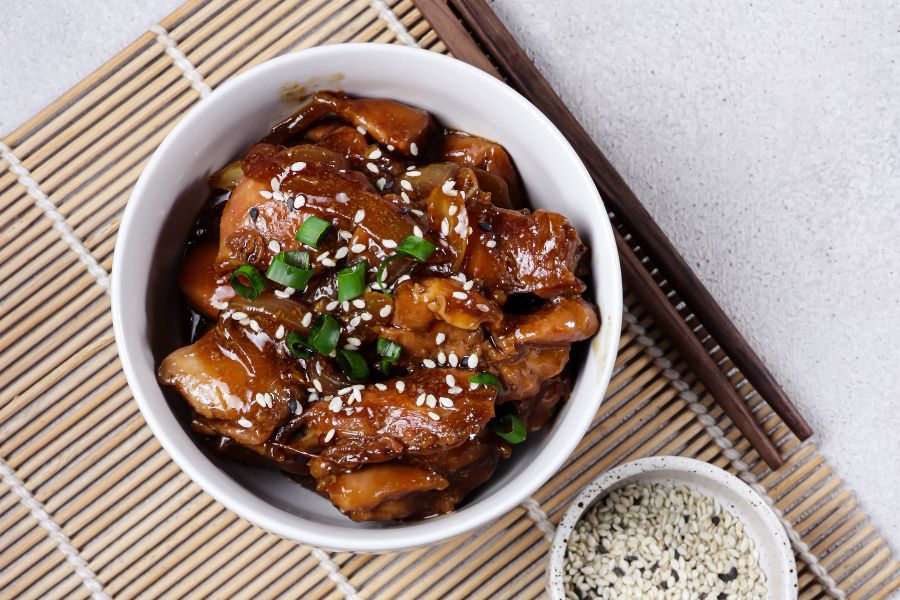
Gluten-Free Teriyaki Chicken
April 1, 2024This sweet meat dish is always a crowd pleaser. For a full meal, stir-fry broccoli and snow peas for a serving or two of vegetables and have it all with a bowl of rice.
This recipe was provided by the Gluten-Free Palate.
Ingredients
Yields four servings
- 1 ¼ – 1 ½ lb boneless skinless chicken breasts, cut into 1-inch pieces.
- 1 Tablespoon olive oil (or oil of choice)
- ¼ cup (gluten-free) soy sauce or Tamari sauce
- ¼ cup water
- 2 Tablespoons packed light brown sugar
- 1 Tablespoon rice vinegar (or white vinegar)
- ¼ teaspoon toasted sesame oil
- 2 teaspoons peeled and minced fresh ginger
- 2 teaspoons peeled and minced fresh garlic (about 2 cloves)
- 1 teaspoon onion powder
- 2 teaspoon cornstarch
Instructions
- In a small mixing bowl whisk together all the ingredients except the chicken and olive oil.
- Heat oil in a 12-inch non-stick skillet over medium-high heat.
- Cook the chicken over medium heat until brown and the internal temperature reaches at least 160°F.
- Add the sauce to the cooked chicken and continue to cook and toss until the sauce thickens, about 1 minute.
- Serve warm garnished with green onions or sesame seeds.
TAGS: LUNCH, FOR KIDS, DINNER
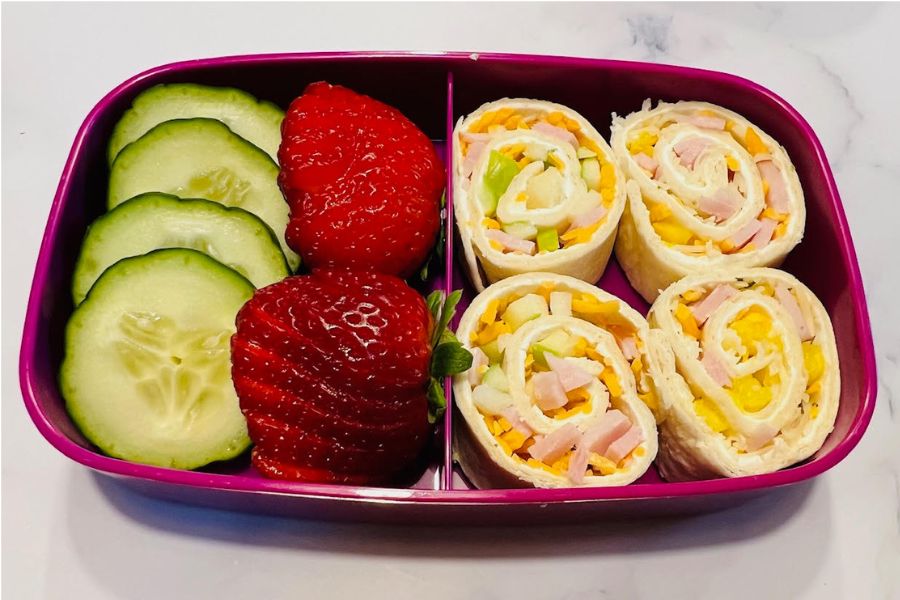
Canadian Bacon and Apple Pinwheels
January 24, 2023 These pinwheels are the perfect star of any lunch box—pack them in a bento box with fruit and carrot sticks or cucumbers for a nutritious lunch on the go. It’s also easily customizable; substitute ingredients in and out for an endless variety of tastes, or to accommodate picky eaters.
This recipe is courtesy of our friends at Jones Dairy Farm. Check the Product Finder on the Jones website to locate a store near you that carries certified gluten-free Jones Canadian bacon.
Ingredients
- 1 (6 oz) package Jones Dairy Farm Canadian Bacon, diced
- 1 cup finely shredded cheddar, or other cheese of choice
- 4 gluten-free tortillas
- 4 oz softened cream cheese
- 4 oz sour cream or Greek yogurt
- 2 Tablespoons dry ranch seasoning
- 1/2 cup apple, diced (or can substitute 1/2 cup pineapple)
Instructions
- Mix cream cheese, sour cream and ranch seasoning in a small bowl.
- Divide equally amongst 4 tortillas and spread to the edges.
- Sprinkle with Canadian bacon, cheese and apples.
- Starting on one edge, tightly roll the tortilla, pressing as you go so ingredients stay in place.
- Place on a cutting board, seam down, and place toothpicks approximately every inch.
- Slice between the toothpicks and serve.
TAGS: FOR KIDS, LUNCH, SIDE DISHES
Slow Cooker Brisket Tacos
March 3, 2021 Recipe courtesy of our sponsor Mikey’s.
This recipe is the perfect set and forget it type of meal. It’s kid-friendly, loaded with flavor, and will make your weeknights easier and tastier.
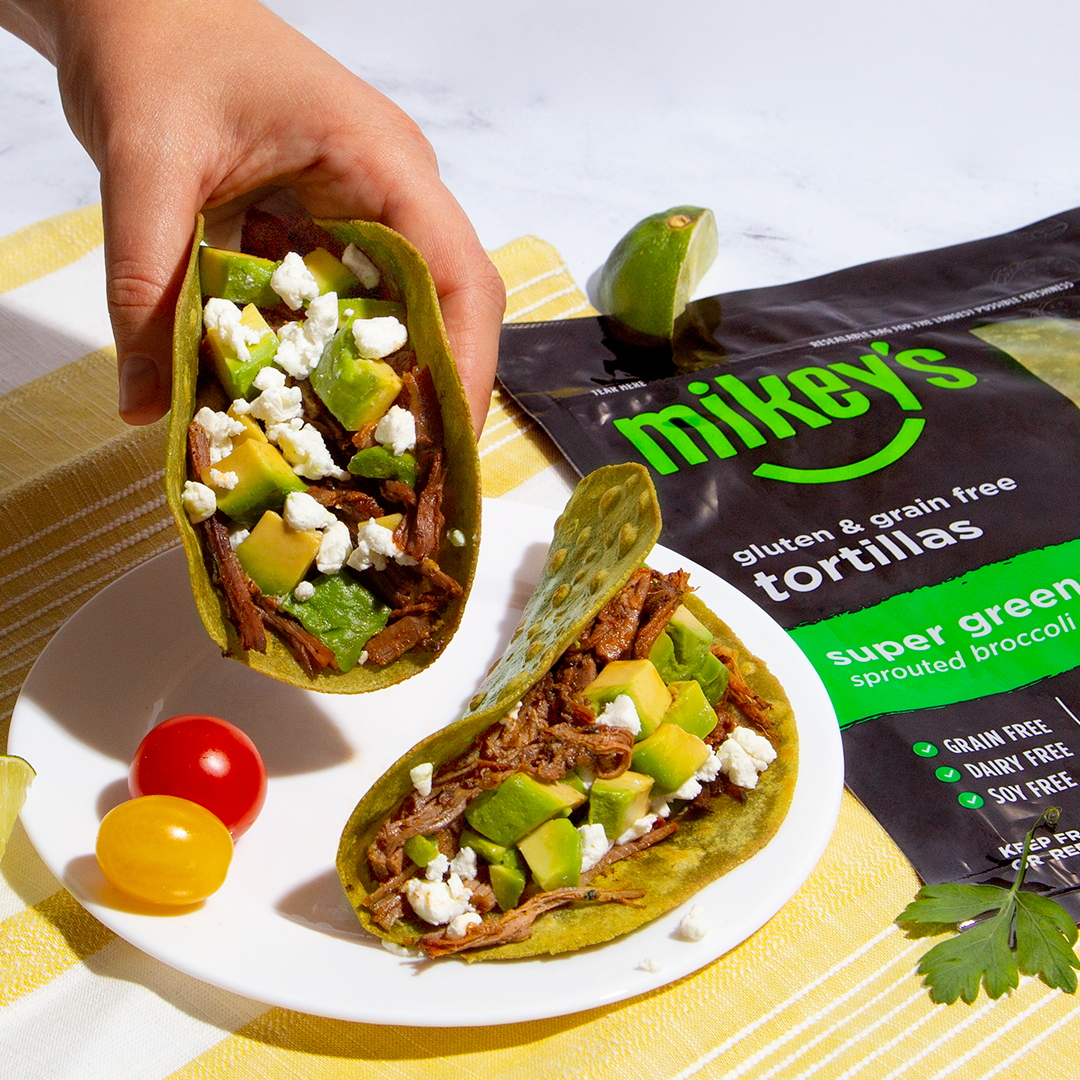 Gluten-Free Slow Cooker Brisket Tacos
Makes 4 servings
Ingredients:
- 3 lbs. beef brisket flat
- 1 (15 ounce) can crushed tomatoes
- 1 (32 ounce) carton beef broth
- 1 onion, peeled and chopped
- 2 carrots, peeled and chopped
- Salt and pepper to taste
- 1 package Mikey’s Super Greens Tortillas
- 2 avocados, diced
- 8 ounces goat cheese or dairy-free cheese
Directions:
- Place the brisket in the slow cooker along with the crushed tomatoes,
beef broth, onion, carrots, salt and pepper. - Cook on low for 8 hours or until soft and tender.
- Heat Mikey’s Super Greens Tortillas according to the directions on the
package. - Shred the brisket with two forks and fill the tortillas.
- Top with avocado and goat cheese. Enjoy!
TAGS: DINNER, FOR KIDS, LUNCH, RECIPES OF THE WEEK
Quinoa Cilantro Taco Salad
January 2, 2019Quinoa Cilantro Taco Salad
Courtesy of Crunchmaster
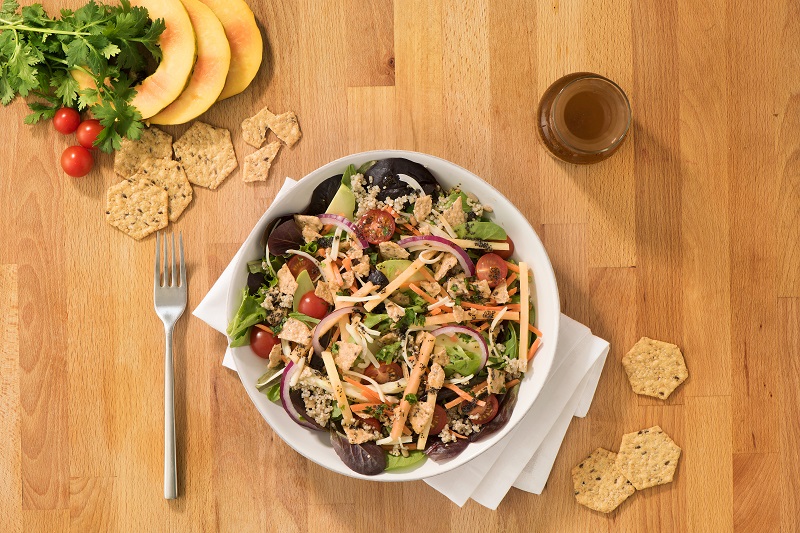 Gluten-Free Quinoa Cilantro Taco Salad
Ingredients:
- 1 cup Crunchmaster® Roasted Garlic Multi-Seed Crackers, crushed
- 2 tbsp Olive oil
- 1 tsp Apple cider vinegar
- 1 tsp Cumin
- ½ tsp Chili powder
- ¼ tsp Sea salt
- 2 tbsp Poppy seeds
- 1/3 cup Sunflower seed
- 1 cup Quinoa, cooked
- 4 cups Mixed salad greens
- 5 Fresh chives
- ½ cup Cabbage, shredded
- 6 Cherry tomatoes
- 1 Medium red onion, sliced
- ½ cup Fresh cilantro, finely chopped
- 2 tbsp Fresh parsley, finely chopped
- 1 Medium carrot, cut into matchsticks
- 1 Ripe avocado, peeled, pitted and sliced
- 1 Papaya, cut into 1/4-inch slices
- 1 cup Shredded mozzarella cheese
Directions:
- Combine olive oil, apple cider vinegar, cumin, chili powder, sea salt, poppy seeds and quinoa in a large mixing bowl; gently toss to combine.
- In a large serving bowl, add mixed salad greens; top with quinoa mixture. Add crushed Crunchmaster® Crackers and remaining ingredients; mix well.
<< Back to Recipes
TAGS: DINNER, FOR KIDS, LUNCH, VEGETARIAN
Mini Quiches
November 7, 2018Mini Quiches
 Courtesy of Crunchmaster
Gluten-Free Mini Quiches
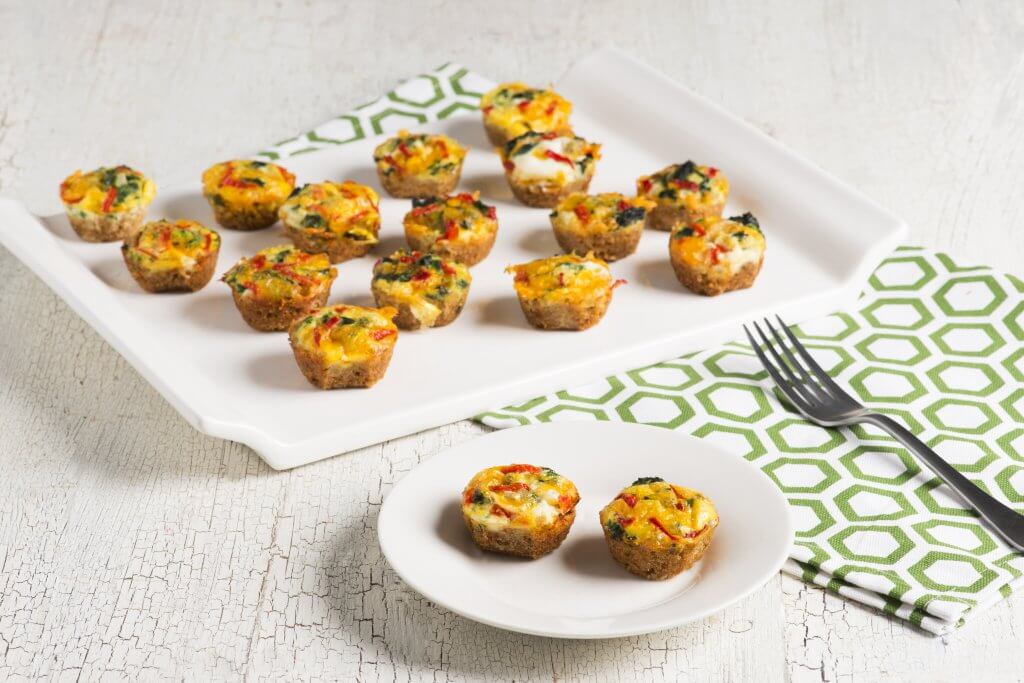 Makes 24 mini quiches
Ingredients:
- 1 ¼ cups finely crushed Crunchmaster® Rosemary & Olive Oil Multi-Seed Crackers
- Gluten-free non-stick cooking spray
- ½ tsp. salt
- ½ tsp. black pepper
- ¼ tsp. grated fresh nutmeg
- 6 tbsp. unsalted butter, melted
- 1 cup shredded sharp cheddar cheese
- 1 cup milk
- Oils & Vinegars
- 2 tbsp. olive oil
- 1 cup finely chopped onion
- 1 – 10 ounce package frozen spinach, thawed
- 1 roasted red pepper, cut into 48 small slivers
- 2 large eggs
Directions:
- Preheat oven to 350 degrees. Spray a min muffin pan (24 tins) with non-stick cooking spray.
- Combine the cracker crumbs and melted butter. Divide crumb mixture among the prepared mini muffin cups and press down firmly. Bake for 7 – 8 minutes. Remove from oven and set aside.
- In a large skillet over medium heat, heat the oil and add the chopped onion. Cook the onions until very soft and starting to brown, about 10 minutes, stirring occasionally. Squeeze all the liquid out of the spinach, add to the onions along with the salt, pepper and nutmeg and cook, stirring, for 30 seconds. Divide the mixture evenly on the cracker crumbs. Divide the shredded cheese on top of the spinach mixture.
- Whisk the eggs and milk together and spoon into the muffin cups; do not fill all the way. Top with the roasted red pepper slivers and bake until set and browned, about 20 minutes.
<< Back to Recipes
TAGS: BREAKFAST, VEGETARIAN, THANKSGIVING, LUNCH, HOLIDAY, FOR KIDS, APPETIZERS/SNACKS
Colby Jack Cheese Quesadilla
May 9, 2018Colby Jack Cheese Quesadilla
From Cindy Gordon of Vegetarian Mamma
 When it comes to eating gluten-free, we need to make sure that the food we are putting into our bodies is indeed gluten-free. When it comes to cheese, you do need to be cautious. Love deli cheese? You have to be cautious of cross contamination from the cheese slicer in the deli. If you want to be safe and not worry, you need to search out Boar’s Head Cheese.
Boar’s Head is a family owned business that started in New York City over 110 years ago. Frank Brunckhorst founded the company out of his dissatisfaction with the quality of deli meats available at the time. He set out to create a brand that focused on quality meat, and started the line of deli meats, cheeses, and condiments that we still enjoy today. Boar’s Head prides themselves as being master craftsmen in their industry, and skilled artisans in the art of meat and cheese making. They hold themselves to high standards of quality, use only the finest ingredients, and their entire product line is gluten-free.
Boar’s Head offers 25 varieties of cheese, in styles from all over the world. You can find Vermont cheddar, Danish blue cheese, Swiss cheeses, French goat cheese, and more at your local deli. Boar’s Head has 6 varieties of Gouda cheese, fresh mozzarella, and two varieties of hard Italian cheese as well.
Boar’s Head Cheese is delicious enough to eat as a stand-alone item or on your favorite sandwich. We recently created a delicious and quick lunch option that uses Boar’s Head Cheese.
Lunch time on the weekends is hectic around my house. There always seems to be something going on. We rely on Boar’s Head to provide us with delicious tasting gluten-free cheese. Our latest creation was a quesadilla.
For this quesadilla we used the Colby Jack cheese from Boar’s Head. Colby Jack is a tasty mixture of Colby and Monterey Jack cheeses. It is a semi soft cheese that is sold in many shapes. For our quesadilla, we used the Coby Jack cheese slices.
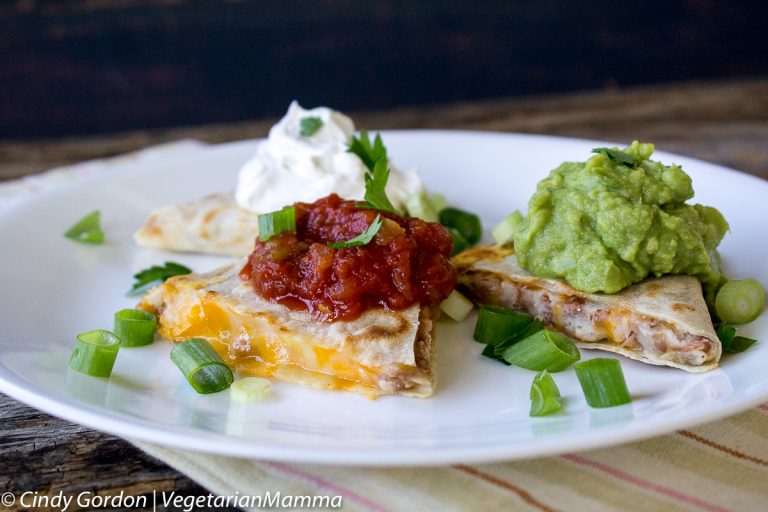
Boar’s Head Colby Jack Cheese Quesadilla
Ingredients:
- 1 gluten-free soft tortilla shell
- ½ cup pinto beans, smashed
- 2 slices of Boar’s Head Colby Jack Cheese
- optional garnish: Sour Cream, Guacamole, Salsa, Cilantro, Green Onions
Directions:
- In a medium skillet over medium heat, warm the soft tortilla shell.
- Place one slice of Boar’s Head Colby Jack cheese on half of the tortilla.
- Next, layer the smashed beans on top of the cheese slice.
- Place the remaining Colby Jack cheese slice on top of the smashed beans.
- Fold the tortilla in half. Warm each side to a golden brown or until the cheese melts.
- Garnish with your favorite extras such as sour cream, guacamole, salsa, cilantro or green onions.
ENJOY!
Boar’s Head Cheese is a great option for my family. We love that the cheese slices come in resealable containers. This works out very well for my family. The cheese stays fresh and protected in the containers.
Check out the full selection on their website, you’re sure to find your favorite.
Guest Author, Cindy Gordon, is the owner and writer behind VegetarianMamma.com Cindy shares recipes that are gluten-free and vegetarian on her site. Her site also shares insight to her gluten-free travel experiences and provides tips on where to safely travel while gluten-free.
<< Back to Recipes
TAGS: VEGETARIAN, LUNCH, FOR KIDS, DINNER
Ovengold Turkey Salad
July 24, 2017Ovengold Turkey Salad

Courtesy of Boar’s Head
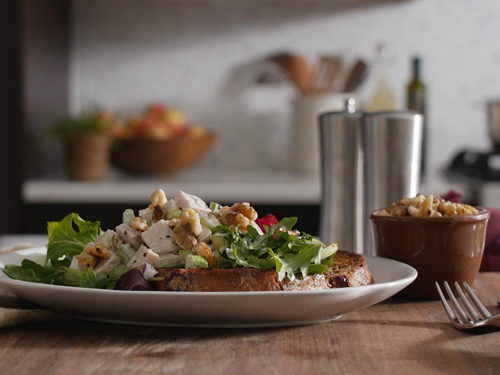 Slow-roasted Ovengold Turkey Breast and fresh-chopped vegetables make this gluten-free salad as refreshing as it is unforgettable.
Ingredients:
-
1 lbOvengold® Roasted Turkey Breast, diced 1/4 in. thick
-
¼ cup Red onion, chopped
-
2 cups Celery, diced 1/4 in. thick
-
1 tsp Garlic relish
-
1 tsp Black pepper, to taste
-
8 cupsMixed greens
-
1 tbsp Olive oil, for drizzling
-
1 tbsp Balsamic vinegar, for drizzling
Directions:
- On a clean work surface, dice turkey into ¼ inch cubes.
- Combine turkey, onion and celery into medium mixing bowl with relish and golden raisins.
- Sprinkle black pepper over ingredients and add the mayonnaise to the bowl, folding together with a spoon.
- Separate mixed greens to 4 bowls and top greens with a scoop of the turkey salad.
- Drizzle with olive oil and balsamic vinegar, as desired.
<< Back to Recipes
TAGS: APPETIZERS/SNACKS, LUNCH, FOR KIDS, DINNER
Chicken Nuggets on a Stick
June 19, 2017Chicken Nuggets on a Stick

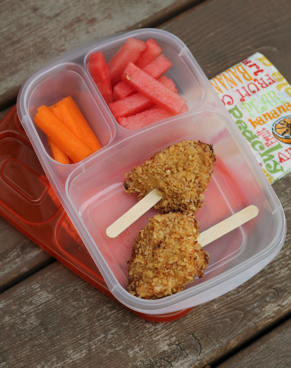 Adapted from www.KeeleyMcGuire.com Garlic & Parmesan Lentil Chips make a yummy coating for chicken, which bakes up beautifully. Add a Popsicle stick for lunchtime fun!
Ingredients:
- 1 pkg. of boneless, skinless chicken breasts (approximately 1.25 lbs. containing 3 breasts)
- 1 and 1/2 cup of crushed Lentils Garlic & Parmesan Chips
- 1/4 cup of honey mustard vinaigrette dressing
- Optional: popsicle sticks
Directions:
- Preheat oven to 425°F.
- Line a baking sheet with parchment paper.
- Slice chicken breasts horizontally in the middle, thus making your three chicken breasts into six pieces. Pat chicken dry.
- Crush your lentil chips into crumbs.
- Place crushed lentil chips into a medium to large sized bowl. Pour honey mustard vinaigrette dressing into a small bowl.
- Dip chicken first into the vinaigrette and coat both sides, then roll the chicken in the crushed lentil chips. Use your hands to help pat the crushed chips onto the chicken.
- Repeat until all chicken pieces are coated and placed on the baking sheet.
- Bake in the oven, without turning, for 25–30 minutes.
- Remove from the oven and let cool. Add a popsicle stick for serving.
<< Back to Recipes
TAGS: LUNCH, FOR KIDS, DINNER
Grilled Ham, Apple and Raisin Bread Sandwich
March 7, 2016Grilled Ham, Apple and Raisin Bread Sandwich
.jpg)
Courtesy of Three Bakers
Ingredients:.jpg)
- 2 slices Three Bakers Raisin Bread Oil or butter for spreading
- 2 to 3 slices thinly sliced gluten-free deli ham
- 4 thin slices of a cooking apple, such as Granny Smith or Harlson Thinly sliced Colby jack or cheddar cheese
- 1 1/2 Tbsp. apple butter, optional
Directions:
- Oil or butter the outside of two slices of Three Bakers Raisin Bread. Layer with ham, apple slices and cheese. If desired, spread apple butter on the inside of the bread slices before cooking for added sweetness and spice.
- In a small skillet over medium heat, grill sandwich on both sides until bread is toasted and cheese is melted. Enjoy!
<< Back to Recipes
TAGS: FOR KIDS, LUNCH
Pepchetor Sandwiches
November 4, 2015Pepchetor Sandwiches
Ingredients:
- Brown Rice Tortillas
- Cream Cheese
- Pepperonis
Directions:
1. Fold one tortilla in half, then into quarters.
2. Spread cream cheese on 2 of the quarters and place pepperonis on top of the cream cheese.
3. Place plain tortilla quarters on top. Viola! You have your sandwiches.
<< Back to Recipes
TAGS: FOR KIDS, LUNCH